
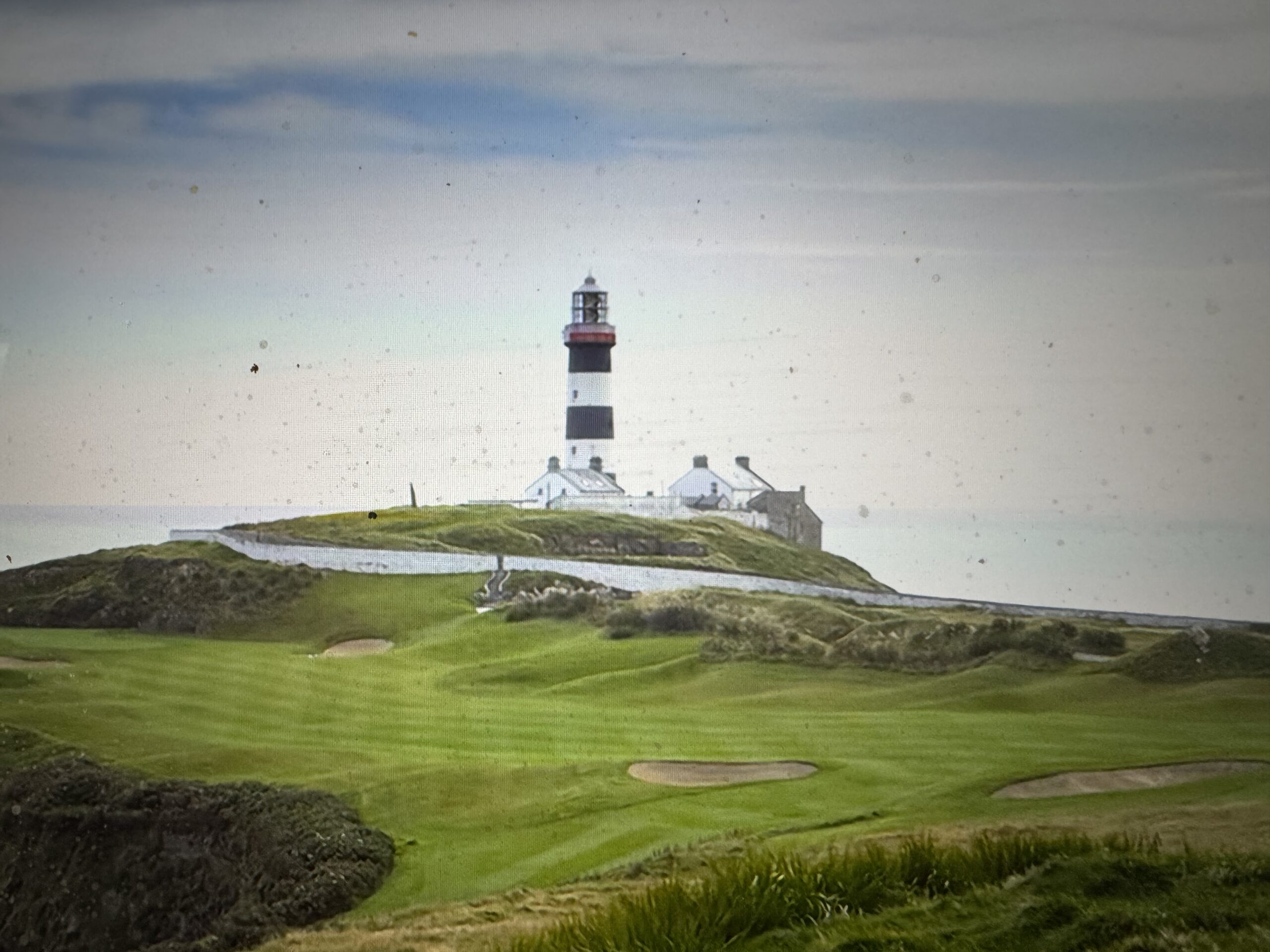
Old Head Golf Links: Gem of the Southwest
We caught Old Head on a day the pro shop said comes around once or twice a year — sunshine for most of the round, wind in the 10-20 mph range, and not a drop of rain. The last time I teed it up at Old Head the heavens opened on the back nine and I have almost no memory of 17 and 18 beyond survival. This time I got to see the course as it’s meant to be seen, and it’s a different experience entirely.
I played the yellow tees at 6,030 yards, moving up to the whites on a handful of holes — 1, 2, 3, and 13 — for a composite yardage of roughly 6,200. That’s plenty of golf course when the wind is up and the fairways run out to cliff edges.
The Front Nine
The good weather enabled the course to play as it was designed without having to compensate for significant wind (and sometimes rain and visibility). As a result we found the fairways on the front nine to be generous, but you had to hit the tee shot into the right positions in the fairways to be able to get into position to hit these large green complexes. The front nine plays at longer distances than the back, which kind of evens the difficulty presented by the course albeit for very different reasons. A good example is the par 4, 4th hole with a large fairway and ocean view left. There is a wall on the left that shouldn’t present any difficulty, but the prevailing wind blows right/left across the hole, and a ball that drifts too far right leaves a tougher approach into the green. The first hole is a real confidence builder, but then you make that walk down to No. 2 and you realize you’re in for quite a challenge.
The Back Nine
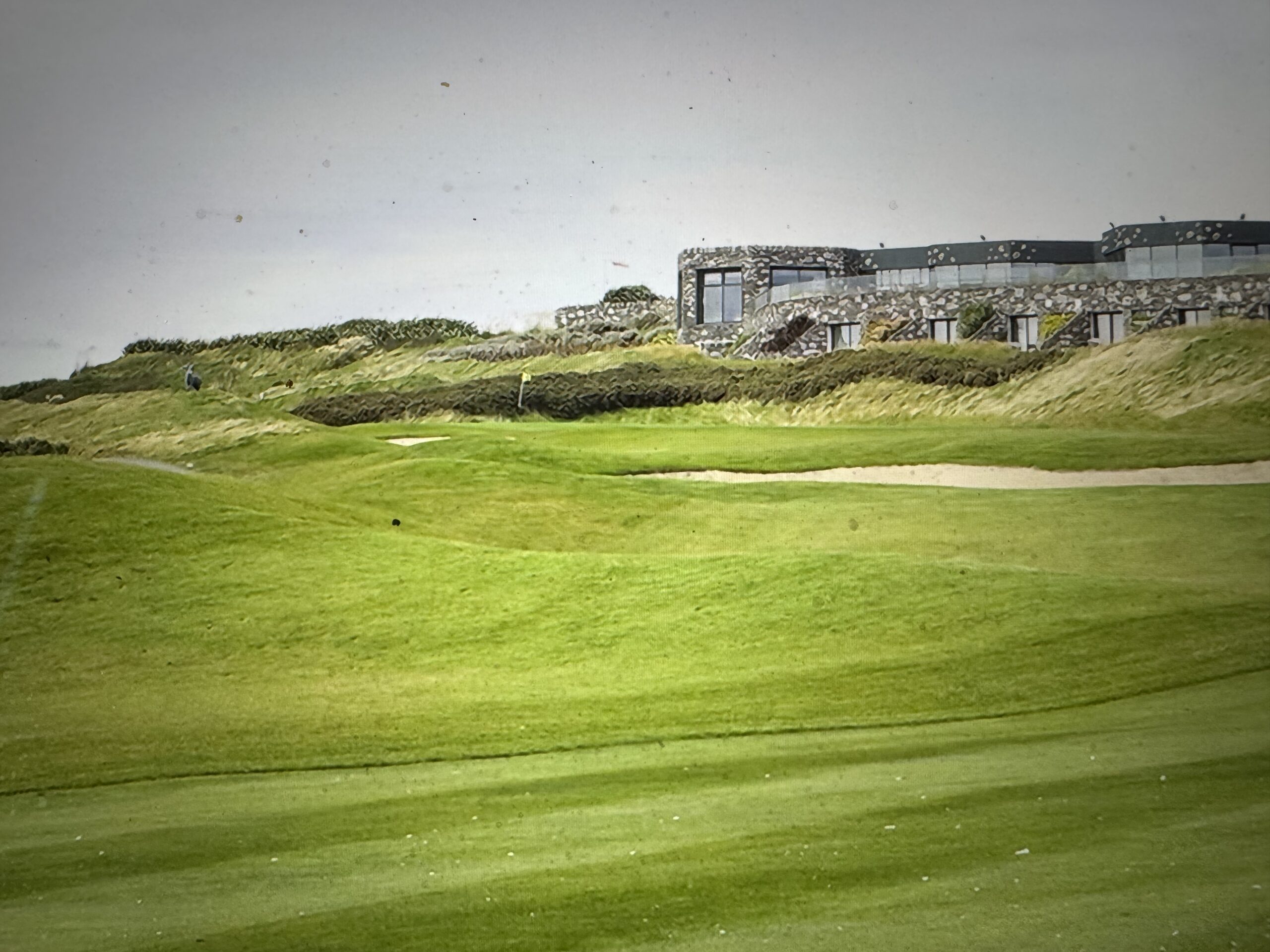
The back nine presents an entirely different look that speaks to you and says “Time to Get Serious.” Driver length is a great advantage on the front side but not as much as the back nine. Driver accuracy is critical, and the par 5, 10th is that first wake-up call. The par 3’s on the backside are strong holes with good length; club selection is usually difficult with swirling winds and the surrounding gorse, but on this day the holes played to the appropriate length without a bunch of adjustments.
The worst wind of the day arrived in the early evening, as our round ran late into the long Irish summer daylight — we were finishing up around 8 PM. The 17th hole took the brunt of it, requiring a tee shot down the left side of the fairway, away from the ocean on the right. The hole continues to meander down to the hole, presenting an inviting approach shot to a large green. The 18th is another bruiser, a big boy par 4 with a wall and road on the right and the prevailing wind blowing left to right. I wouldn’t want to have to play this one in the rain.
The 12th
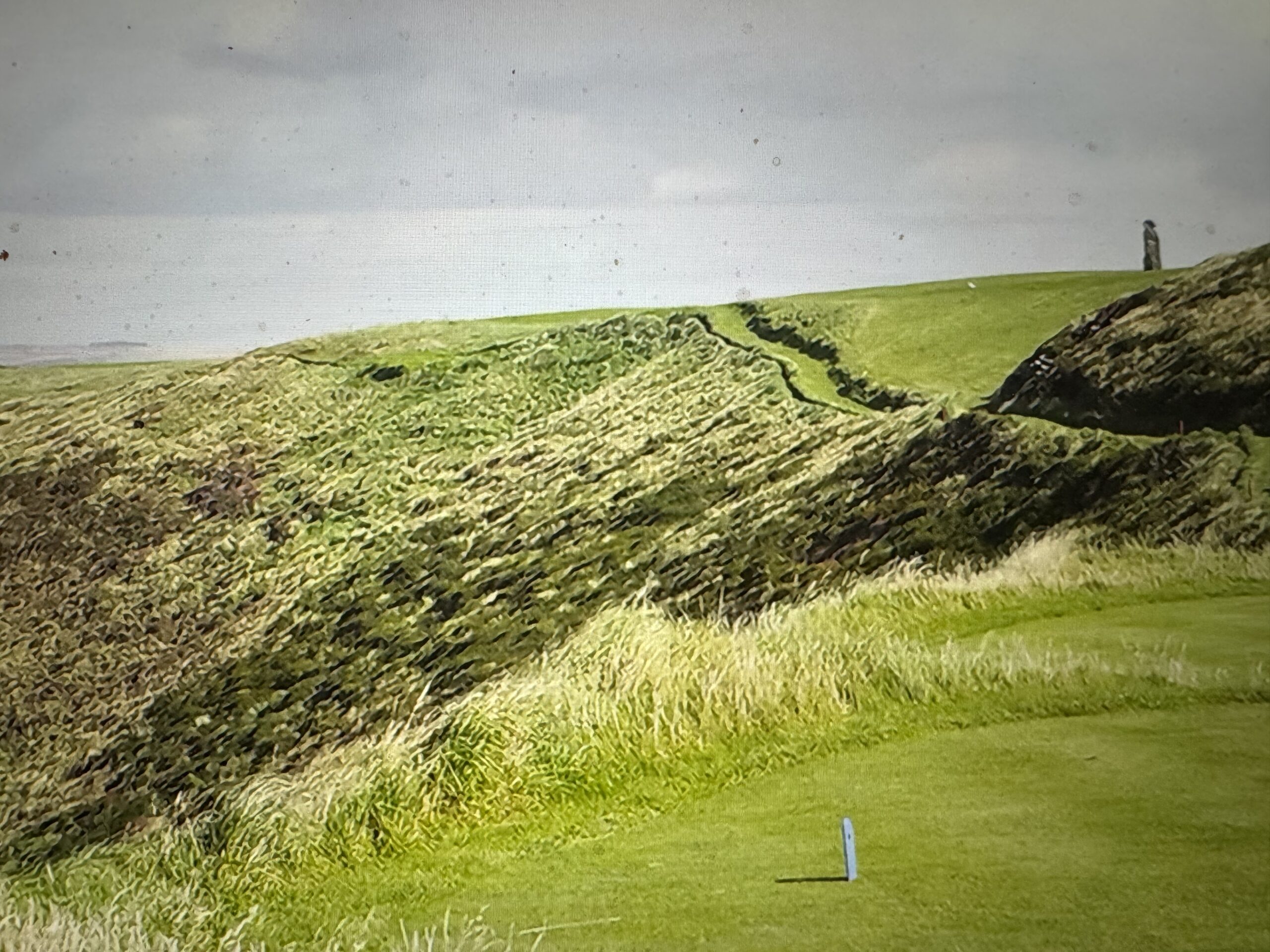
The blind tee shot-aim directly at the pole
And then there’s the 12th. I think it’s the toughest hole on the planet. To play it in good weather and walk away with a par was the single best moment of the day — not because the hole is unfair, but because it demands precision from tee to green with essentially no margin. Every shot hit on this hole has to be placed in the right position, as it almost feels like you’re playing the accordion. Tee shot in the middle of the fairway, which is right of the directional pole. The fairway widens and then almost becomes an hourglass shape. Your approach shot to this green has to be center right, as a shot that misses the green ever so slightly on the left will roll into the ocean.
The Par 3’s
The par 3’s present significant challenge, beauty, and unique shot-making opportunities, especially the 16th hole, which requires a carry through the gorse to a very large green. You’ll need to clear the gorse on the left center and try to land the ball short so it rolls onto the green. Shots carried all the way to the green will probably end up at the back of the green or over it, making a two-putt par a real challenge.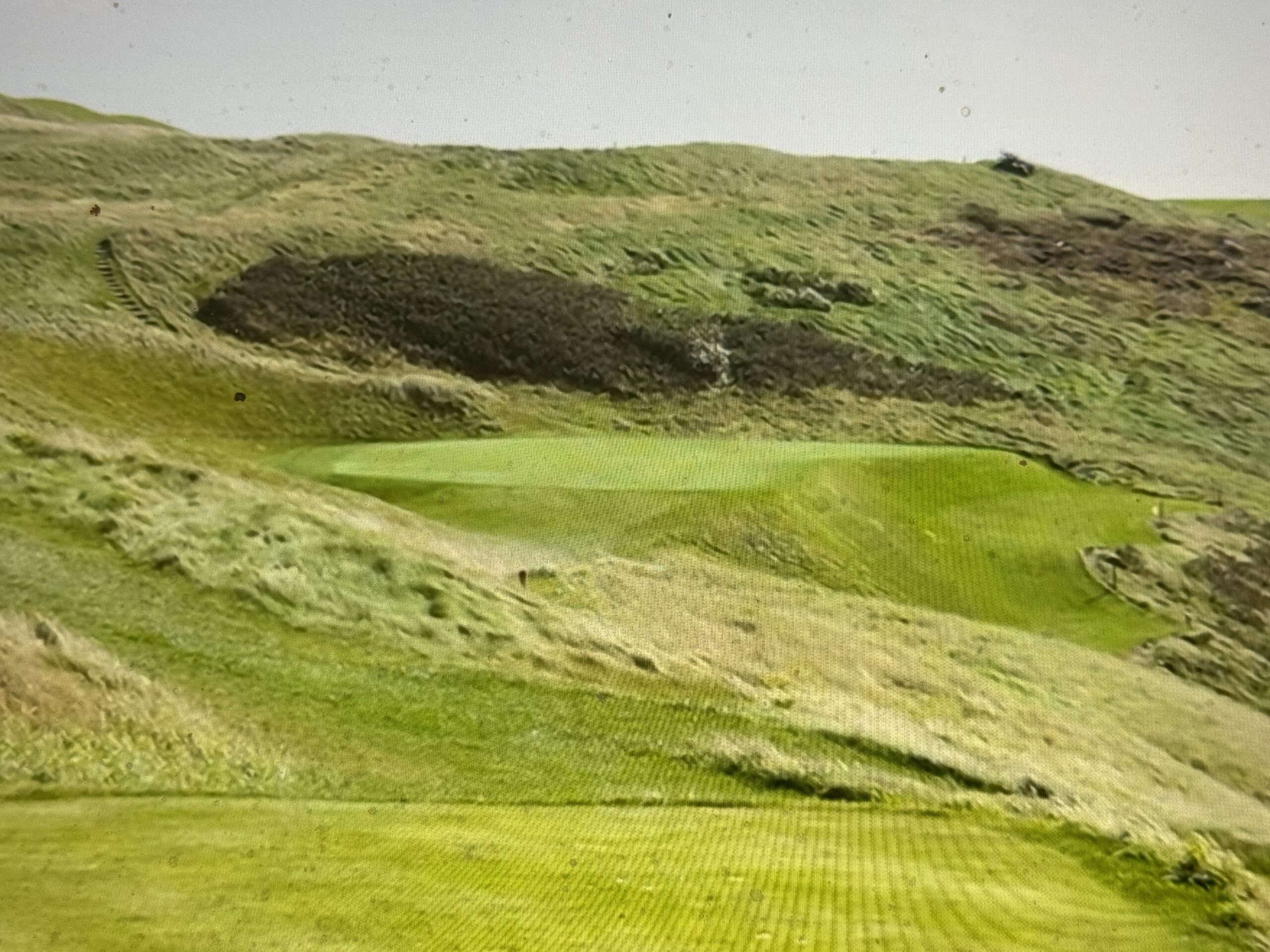
The Greens
The greens were in excellent shape — smooth, true, without a lot of manufactured trickery in the contours. I’d put them at roughly a 10 on the stimpmeter, compared to the 12-13 I’m used to at Monterey Peninsula Country Club. That’s a meaningful gap in pure speed, but the greens were rolling as well as anything I’ve played on this trip, and the pace suited the scale of the greens and the winds coming off the cliffs. That 12th green is a good example — at MPCC speeds, a shot leaking left there would never stop rolling before it reached the ocean. This isn’t a course that needs lightning-fast surfaces to be a serious test — the terrain and the exposure do plenty of the work.
The Experience
Against the rest of the Southwest Ireland lineup, Old Head lands just a tick ahead of Waterville for me. It’s close — these are both exceptional golf courses — but the 12th hole alone tips the scale, along with the sheer drama of playing golf on a peninsula with sheer cliffs, a working lighthouse, and ocean views on nearly every hole. It was great to be able to experience the course and the spectacular scenery of the peninsula as it adjoins the Atlantic Ocean.


0 Comments