The last installment from the Ireland trip is La Hinch. We’re skipping a review of the Dook course. Dook was fun to play but the greenskeeper had to be on vacation as the greens were slower than molasses. It seemed the greens were 7-8 on the stimpmeter and I became so frustrated that I considered using my 7 iron to putt. I hadn’t seen greens like this since I played Mission Hills in Shenzen, China where the greens couldn’t be distinguished from the fairway. It was a potential good scoring day denied by these greens as I must have had over 35 putts for the round. This is not an excuse but the reality.
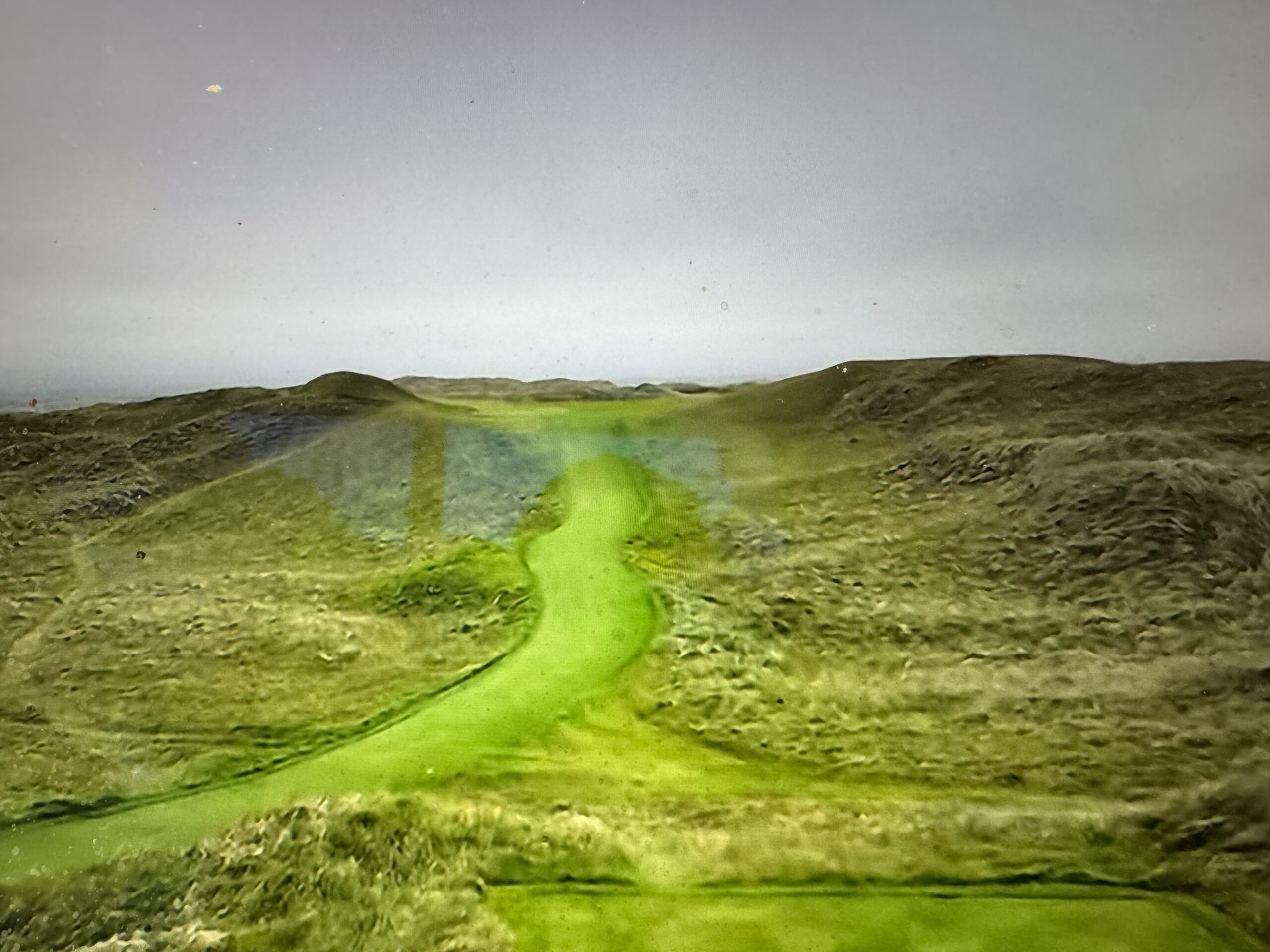
The key image in this post is not an error. It is the par 3, 5th hole of 148 yards at La Hinch. You might think that I had a bit of alcohol when I wrote this post to set up this image of a golf hole that you cannot see from the tee box. The image is a huge mound of scrub, weeds and morass shaped with a golf hole behind the mound. . There is a smidge of green visible way to the right of the flag. Hitting into a 35 mph. wind, the carry over the mountd would have to be at least 160 yards with an elevated shot. I chickened out and placed the ball on that smidge of green some 85 ft. from the hole, made two putts for par and snuck away.
There was a considerable difference in opinions on La Hinch from the group as most gave the course effusive praise. However, I hate blind shots and La Hinch has plenty of them. It’s undeniable that La Hinch is a wonderful layout as the course unfolds into the Atlantic coastline. The addition of considerable wind, at least 30-35 mph is fairly typical and presents significant difficulties with club selection. The wind blew hard all day impacting the shots but in a fair and stimulating way as you just have to expect it to impact the round. I didn’t appreciate La Hinch in 1990 and enjoyed a bit more in 2026, but it ranks last on my favorites for the week. There’s no doubt that it is an iconic wonderful layout, but demands an “A” game to really enjoy it and with this wind–it was an 18 hole grind (except maybe Hole 1). We didn’t see the goats mowing the fairway in this round as we had in 1990. The condition of the rough represented that the goats were safely in their pens chomping on some domestic cud instead of the fairways and mounding of the course.
With the absence of rain for this particular round, we were able to experience a course that presents a challenging requirement for positioning especially with the number of blind shots. Lahinch puts you on an exposed stretch of Atlantic duneland and lets the wind do the rest. The wind here isn’t a variable — it’s the baseline condition. The land is laid out plainly enough that a golfer can generally see what’s being asked of them. The difficulty comes from execution under constantly shifting conditions. A shot that plays as a 7-iron in the morning can become a hooded 4-iron by afternoon if the wind swings off the bay. Judging distance, trajectory, and shot shape against a wind that rarely settles is the real skill test at Lahinch — far more than reading a blind tee shot.
Lahinch does not forgive missed fairways or sloppy approach play. Stray off the short grass and you’re into gorse, marram grass, or rough thick enough to lose a full shot or more. You’ll most likely have to suppress the tendency of the “hero” shot and smack it back into the fairway with a sand wedge. Approach shots that miss greens face similarly unforgiving terrain: firm, undulating ground around tightly guarded putting surfaces that reject anything struck without precision. There’s no soft landing zone to bail out into. A shot hit a club short or long in the wind tends to compound rather than solve the difficulty.
The Course
Welcoming first hole
The first hole indicates a warm welcome especially in the dry weather as the wind hasn’t really reared its ugly head-yet. This hole speaks nicely to you but things are about to change quickly on number two with a cold slap.
Second hole–the wakeup with the wind
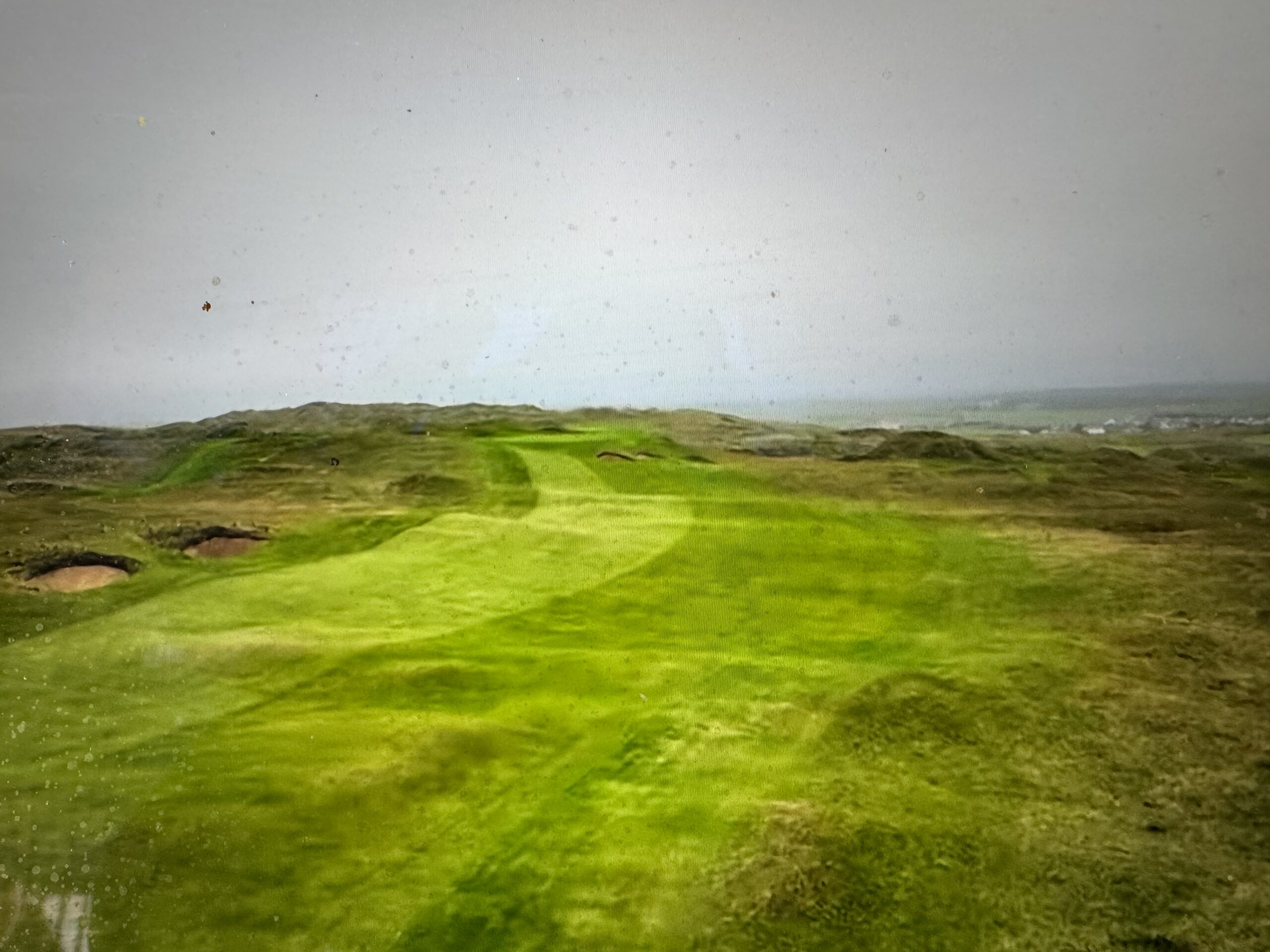
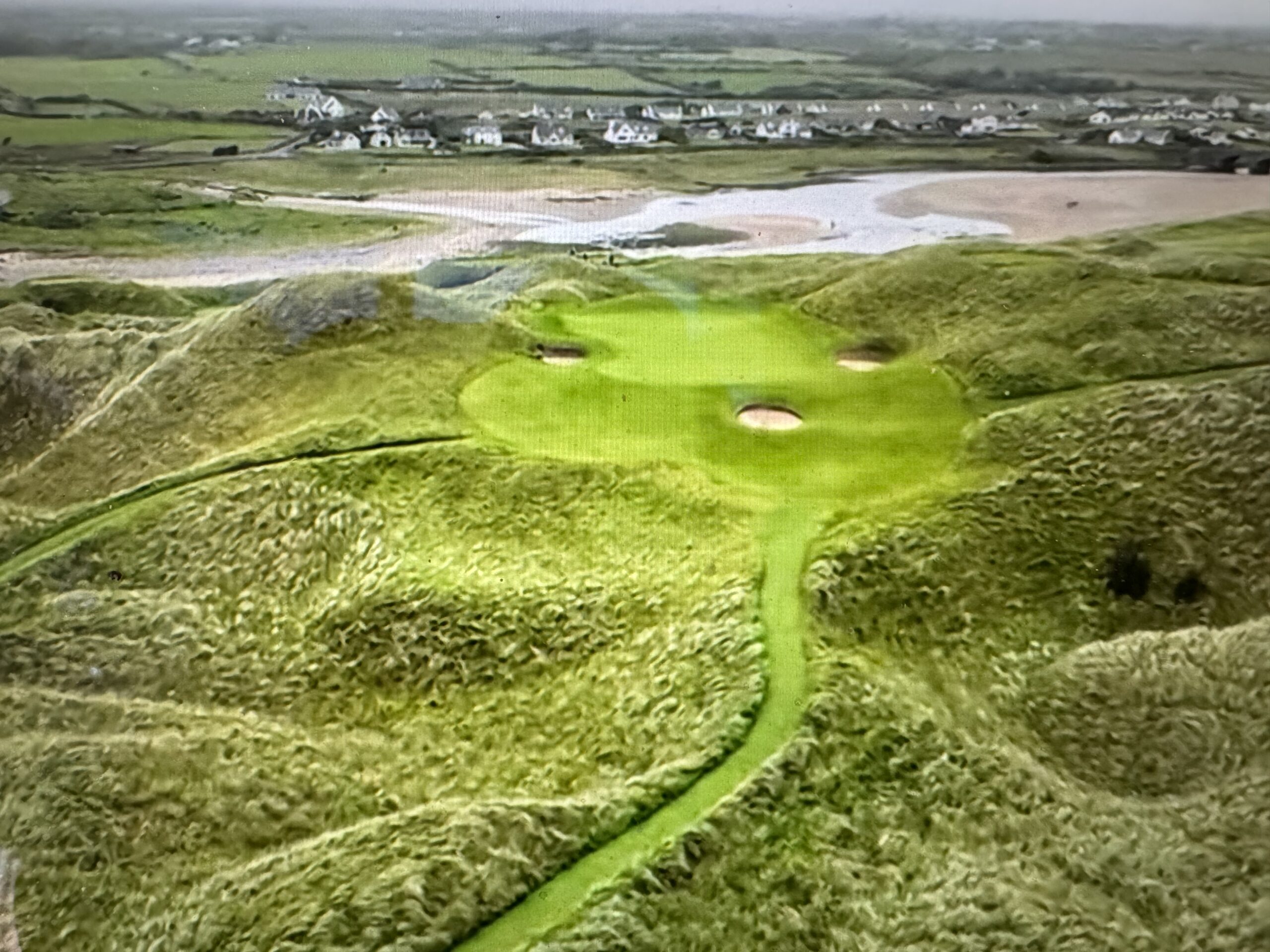
The tee shot has to cover the top a hill to the fairway and the wind kicks in immediately. The 4th hole is an early sign of the demanding stretch to come as the green is tucked among the dunes, giving the wind a natural funnel to work against as an approach shot needs to be struck cleanly to hold. As noted in the paragraph above, I’m not a fan of the infamous par 3, 148 yard, called Dell. This is a hole that should be relegated to a pitch/putt course as you have to carry a monumental hill with a very high shot that just covers the hill. Any shot hit on this green is unlikely to hold unless you’re a professional hitting a lob wedge a mile high. The 6th hole, Paradise, (is anything but) is a par 4 of 412 yards, which played like 550 against the wind. The long hitter might risk hitting the driver through the fairway into some tough stuff, but I would have no such difficulty as I would need three shots to get to this well protected green to make a bogey.
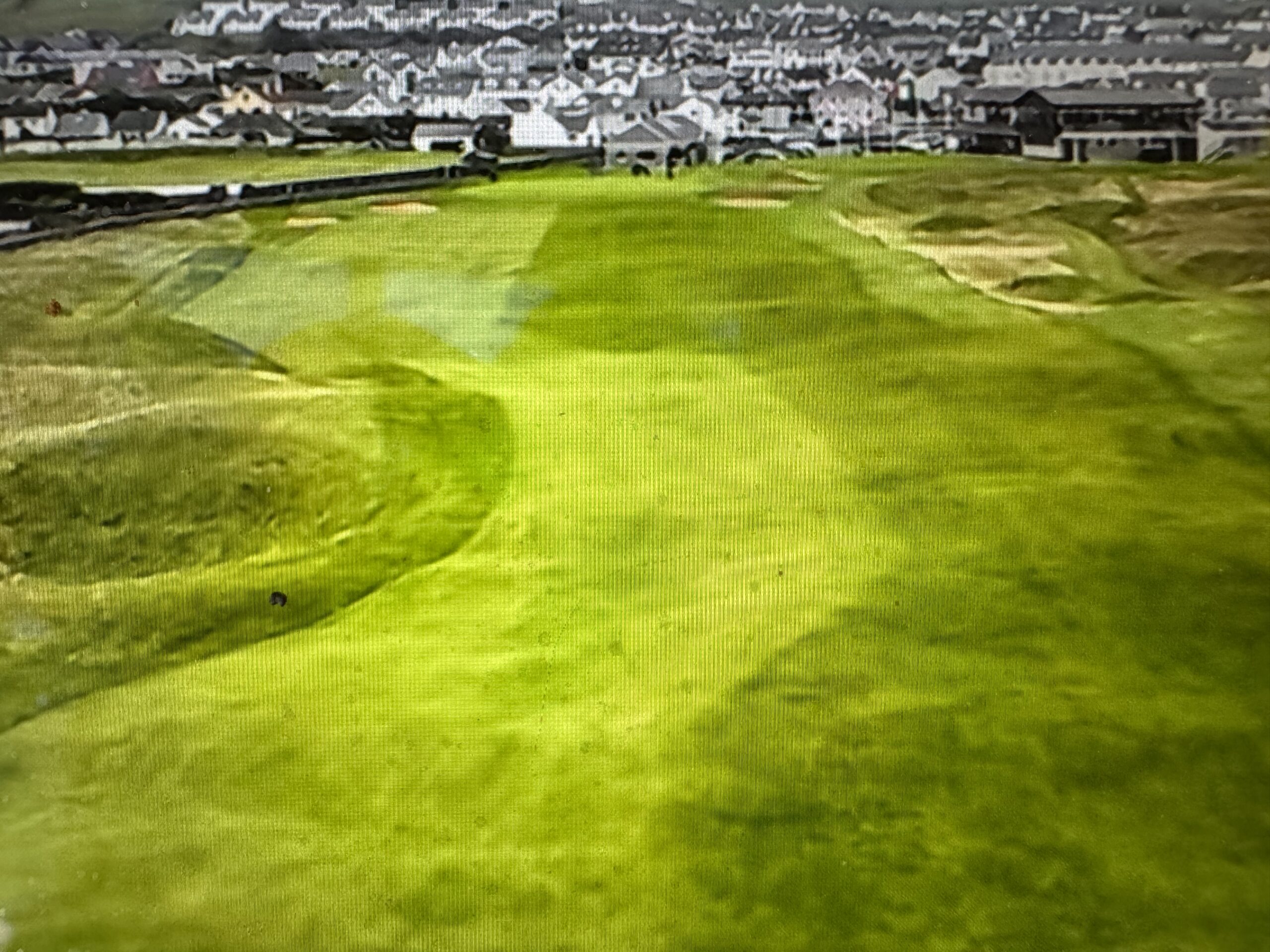
The back nine was a consistent grind in heavy wind with spectacular views of the Atlantic coastline as you head for home. A tidy par on the par 3, 16th hole demanded a four iron from 175 to a receptive green, providing me some encouragement for the home holes. The encouragement would be short-lived as the 17th is a real test where an indifferent tee shot required a layup to the green entry way and a well earned bogey.. The wind on the home hole saved the best for last–blowing at least 35, the 503 yard played a lot longer than that. There is plenty of room to get on this large green but it would take four shots today and a closing bogey. I managed to escape most of the trouble and the dreaded double bogey for a day that left me quite exhausted walking a golf course for the second day in a row.
The 18th-grinding to the end against the wind
I must admit that it was nice to see the entire course contrary to my 1990 experience, but the wind was just a bit much to deal with on this day.
Looking Ahead: The Walker Cup
In September 2026, Lahinch will host the Walker Cup, and it’s genuinely exciting to think about how the best amateur players in the world will handle 7,066 yards of a course that offers plenty of things to think about. . There’s no hiding on this layout — every hole tells you exactly what it wants, and the wind will defend the course. Watching elite amateurs try to control ball flight and distance against whatever the Atlantic decides to do that week should be a proper test of shot-making and course management around blind hazards. It’ll be a genuine measure of who can adapt on the fly.
We use cookies to ensure that we give you the best experience on our website. If you continue to use this site we will assume that you are happy with it.




0 Comments